Greek Exposure - SPX

@gammacharts
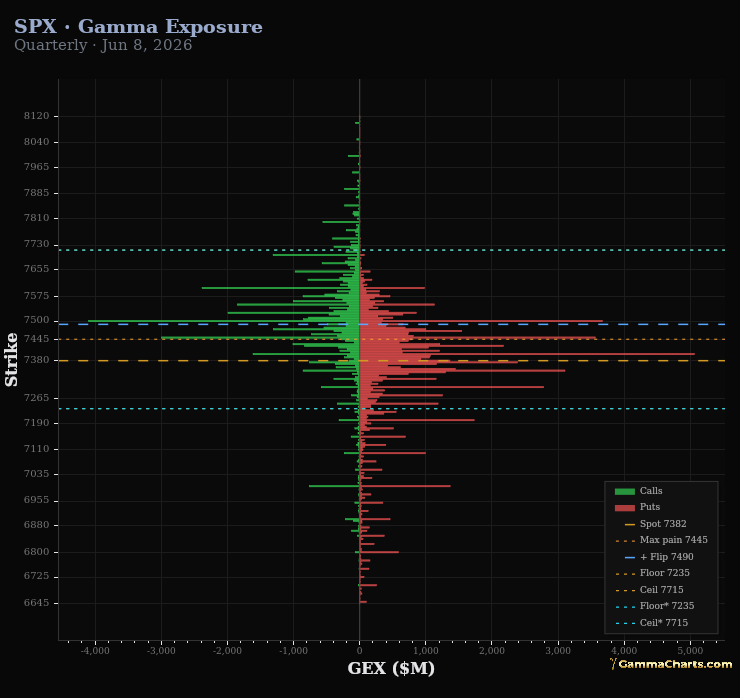
Gamma Exposure - SPX
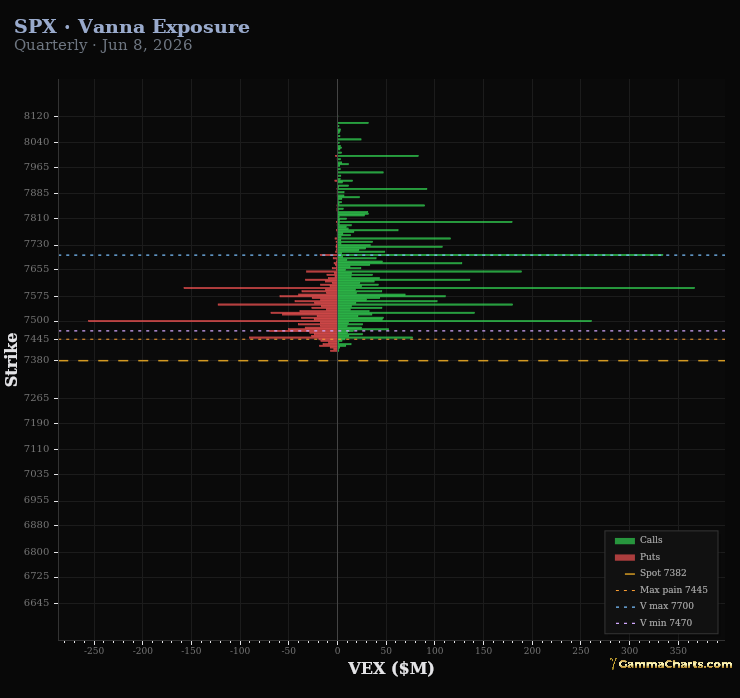
Vanna Exposure - SPX
Charm Exposure - SPX
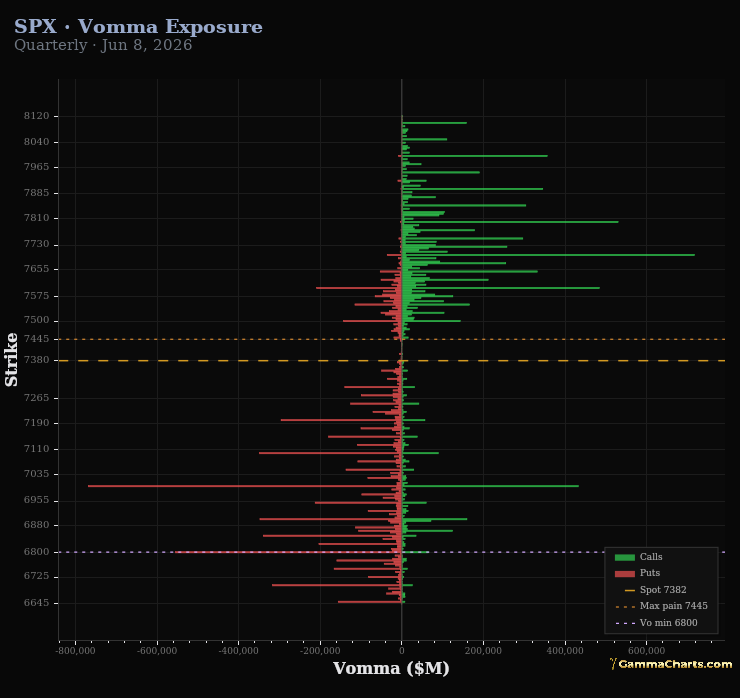
Vomma Exposure - SPX
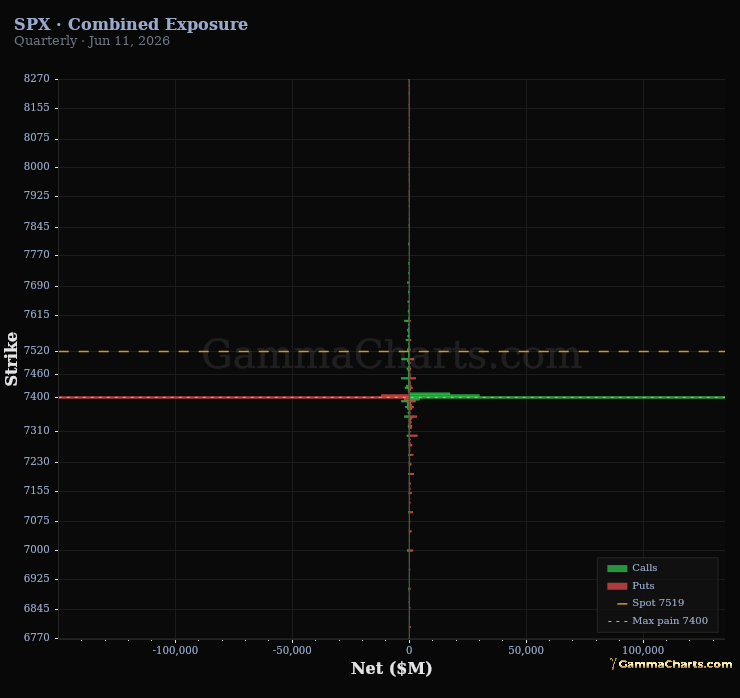
Combined Exposure - SPX

Greek Exposure

Market makers are assumed to be delta-neutral — they hedge their directional exposure continuously. This chart shows the estimated hedging requirements that flow from that assumption, broken down by greek and expiration.

Gamma

Gamma is how much dealers must buy or sell spot as price moves. Positive gamma means they sell into rallies and buy dips; negative gamma amplifies moves.

Vanna

Vanna is how much dealers must buy or sell volatility as spot moves. It explains why vol often rises when price falls — dealers are forced buyers of vol on the way down.

Charm

Charm is how much delta bleeds away with time. Dealers must unwind hedges as expiration approaches, creating predictable intraday flows.

Vomma

Vomma is how much dealer vega changes as implied vol moves. High vomma means a vol spike forces additional vol hedging, accelerating the move.
Options Chain

@gammacharts
Gamma
Vanna
Charm
Vomma
Combined

Options chain

Market makers are assumed to be delta-neutral — they hedge their directional exposure continuously. Each tab shows strike-by-strike call and put dealer exposure for one Greek (or a combined sum of gamma, vanna, and charm).

Gamma

Gamma is how much dealers must buy or sell spot as price moves. Positive gamma means they sell into rallies and buy dips; negative gamma amplifies moves.

Vanna

Vanna is how much dealers must buy or sell volatility as spot moves. It explains why vol often rises when price falls — dealers are forced buyers of vol on the way down.

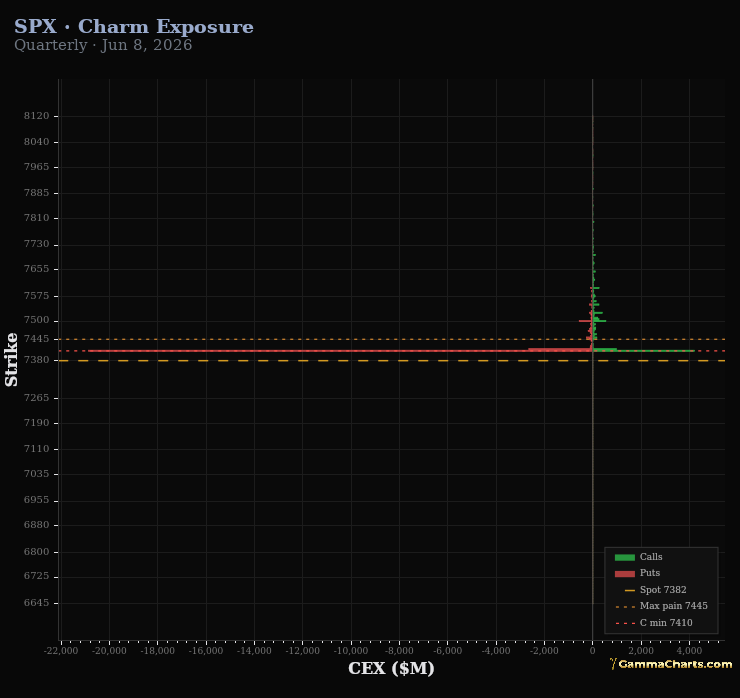
Charm

Charm is how much delta bleeds away with time. Dealers must unwind hedges as expiration approaches, creating predictable flows into expiration.

Vomma

Vomma is how much dealer vega changes as implied vol moves. High vomma means a vol spike forces additional vol hedging, accelerating the move.
Combined

Combined stacks gamma, vanna, and charm at each strike so you can see where total dealer hedging pressure clusters without switching tabs.

The Nasdaq Whale

@gammacharts

In August 2020, massive buying of short-dated call options drove a historic "melt-up" in mega-cap tech stocks. Wall Street eventually unmasked the buyer as SoftBank, which had quietly purchased roughly $4 billion in tech options alongside billions in underlying shares. This massive footprint earned the firm the nickname the "Nasdaq Whale.

The trade weaponized dealer hedging mechanics to create a powerful gamma squeeze. To stay delta-neutral, options dealers were forced to buy tens of billions of dollars of the underlying shares, driving prices higher in a self-reinforcing loop. The feedback loop snapped in September 2020, triggering a sharp market correction and heavy losses that forced SoftBank to wind down the strategy.