
Dispersion Ratio
About
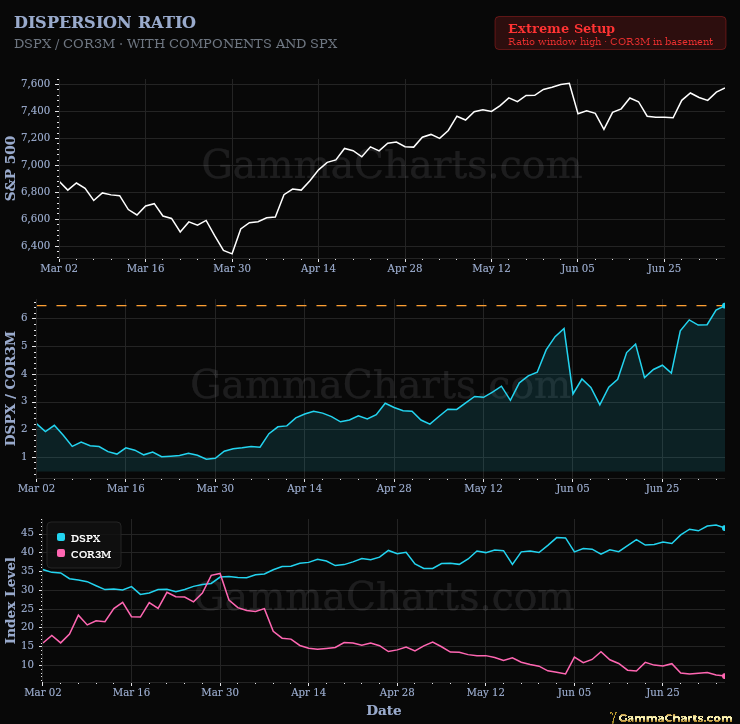
The implied volatility of the S&P 500 measured against the implied volatility of its members, shown as the DSPX / COR3M ratio. Use it to see whether index vol is cheap or rich vs single-name vol.
Instructions
Note a high ratio says the market fears one coordinated move more than it fears individual company events, so macro is in charge. Note a low ratio says single stocks price more risk than the index, which is the environment index vol sellers prefer. Watch the two lines diverge rather than either level alone.
Signals
- Extreme Setup - Ratio at window highs with COR3M in the basement. Highest decoupling stress.
- Decoupled Regime - Elevated ratio with low correlation index. Stock-picker's tape.
- Correlation Collapse - Implied correlation at window lows.
- Dispersion Lead - DSPX/COR3M elevated; idiosyncratic vol rich.
- Compressed - Low dispersion premium; macro lockstep.
- Neutral - Mid-range; no extreme skew.
- NO DATA - Insufficient dispersion history.